
Demolition and Fire Fuel Removal in Cottonwood, CA
Acres of abandoned vehicles, old structures and a full house to take down. Here is what the job involved and how it ended.
- Cottonwood, CA
- Multi-acre property
- House demolition and junk removal
- Licensed, Insured & Bonded. CSLB# 1045590
The job at a glance
When we arrived at this multi-acre property in Cottonwood, California, we knew right away that this was not going to be an average junk removal job. Cars, trucks, boats, RVs and trailers were scattered across the land. So were mobile homes, old sheds and piles of lumber, along with years of accumulated junk and debris.
And standing in the middle of it all was a full three-bedroom house that needed complete demolition and removal.
Over several days, our entire crew took on the cleanout. We brought in our excavators, heavy equipment and roll-off dumpsters, and our junk removal specialists worked right alongside the machines. By the end, a property that had been taken over by abandoned vehicles and deteriorating buildings was a wide-open piece of land with a fresh start. That is what we call a serious clean slate.
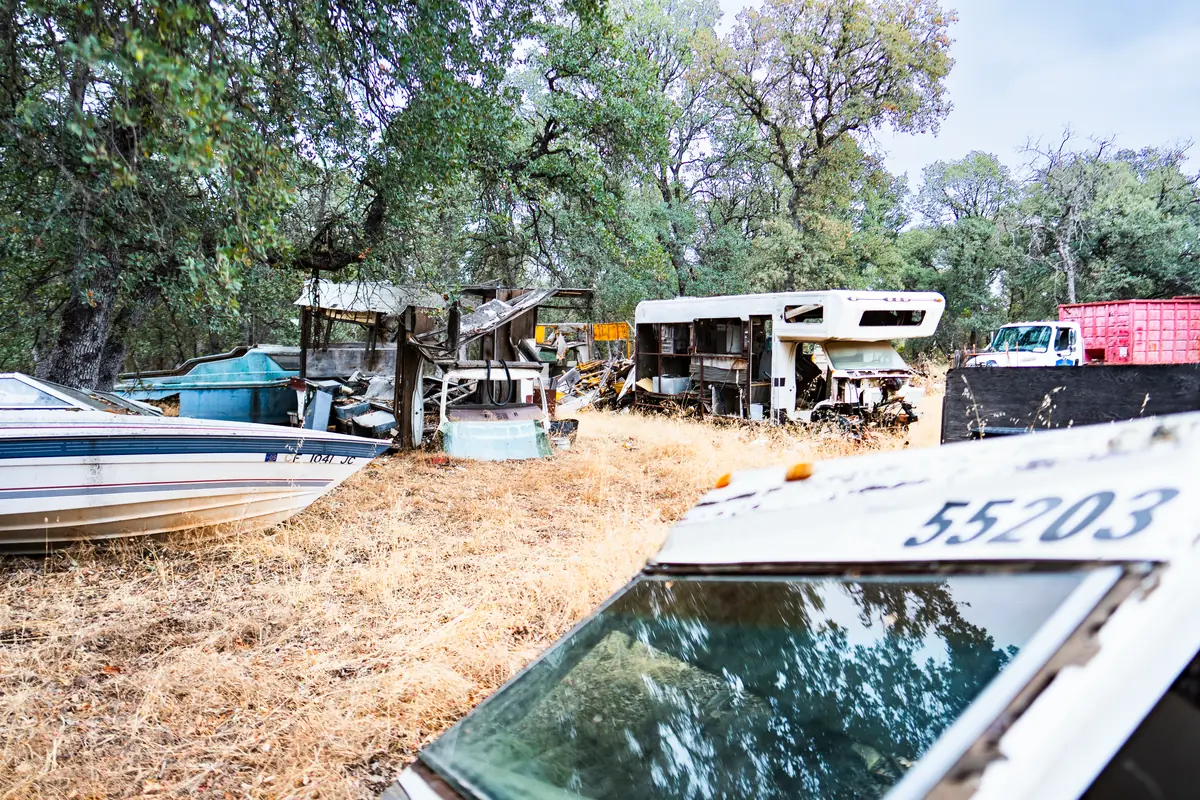
The photo below shows part of what we found: a boat, a motorhome and other vehicles sitting in dry grass under oak trees, with more vehicles and a metal building farther back.
What the property needed
A job this size is really several jobs stacked together. The property needed the vehicles gone, the structures down, the loose material hauled and the fire fuel taken away. Here is each one.
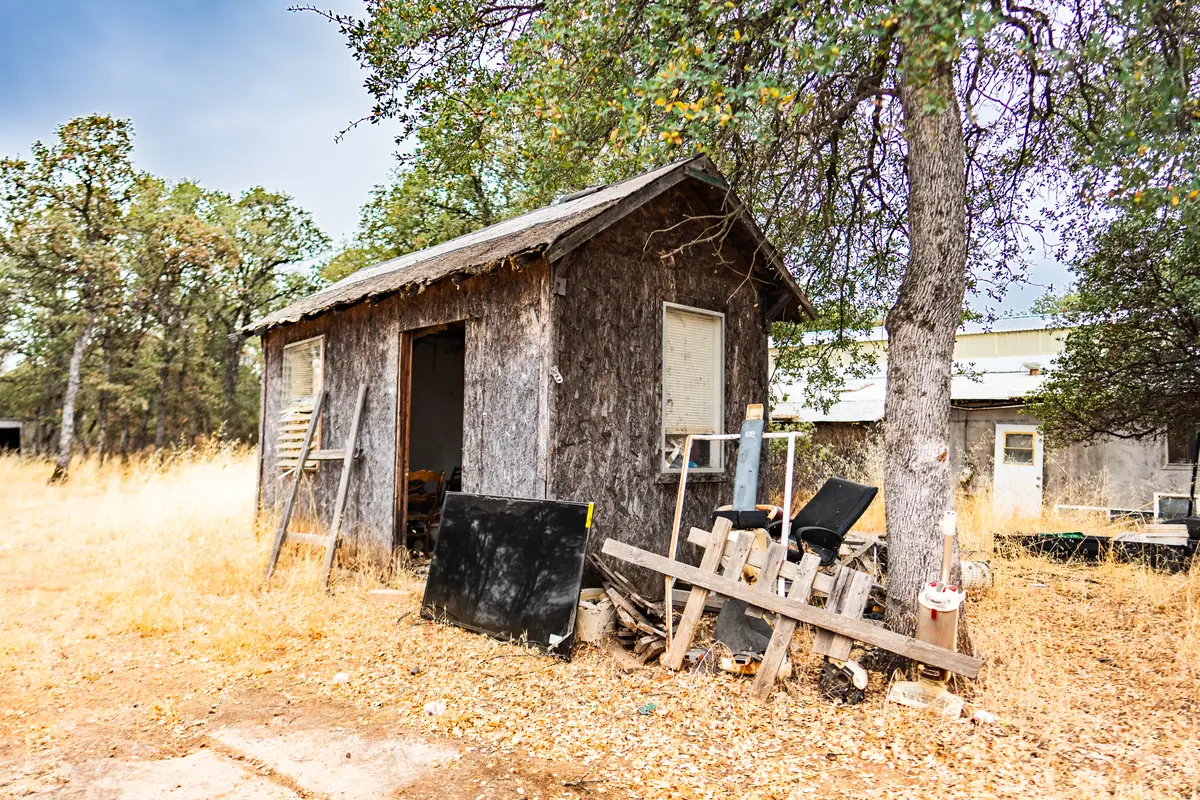
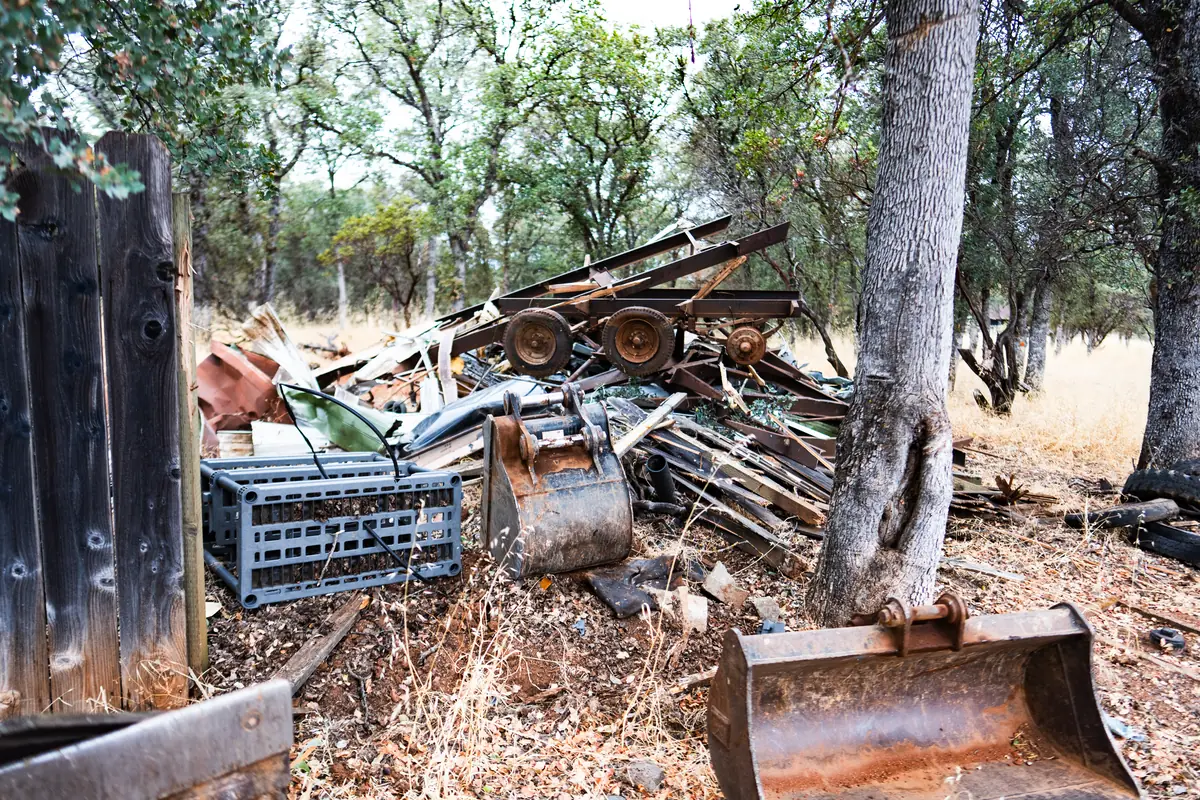
The two photos below give a sense of the material. One shows a weathered wooden shed with boards lying outside it in dry grass. The other shows a pile of scrap metal, with wheels and axles stacked in it.
Abandoned vehicles, boats, RVs and trailers
Cars, trucks, boats, RVs and trailers had been sitting on the land for a long time. Every one of them had to be moved off the property before the ground beneath and around them could be cleared.
Old sheds, mobile homes and a three-bedroom house
Several structures needed to come down, from small sheds to mobile homes to the house. The house was the largest single piece of work, and it called for complete demolition and removal.
Lumber and years of debris
Piles of lumber and general junk were spread across the acreage. Loose material like this has to be loaded by hand and by machine, and it fills dumpsters quickly.
Combustible debris and fire fuel
Dry, piled-up material is the kind of thing that feeds a wildfire. Removing it was part of the job from the start, not an afterthought.
Before and after
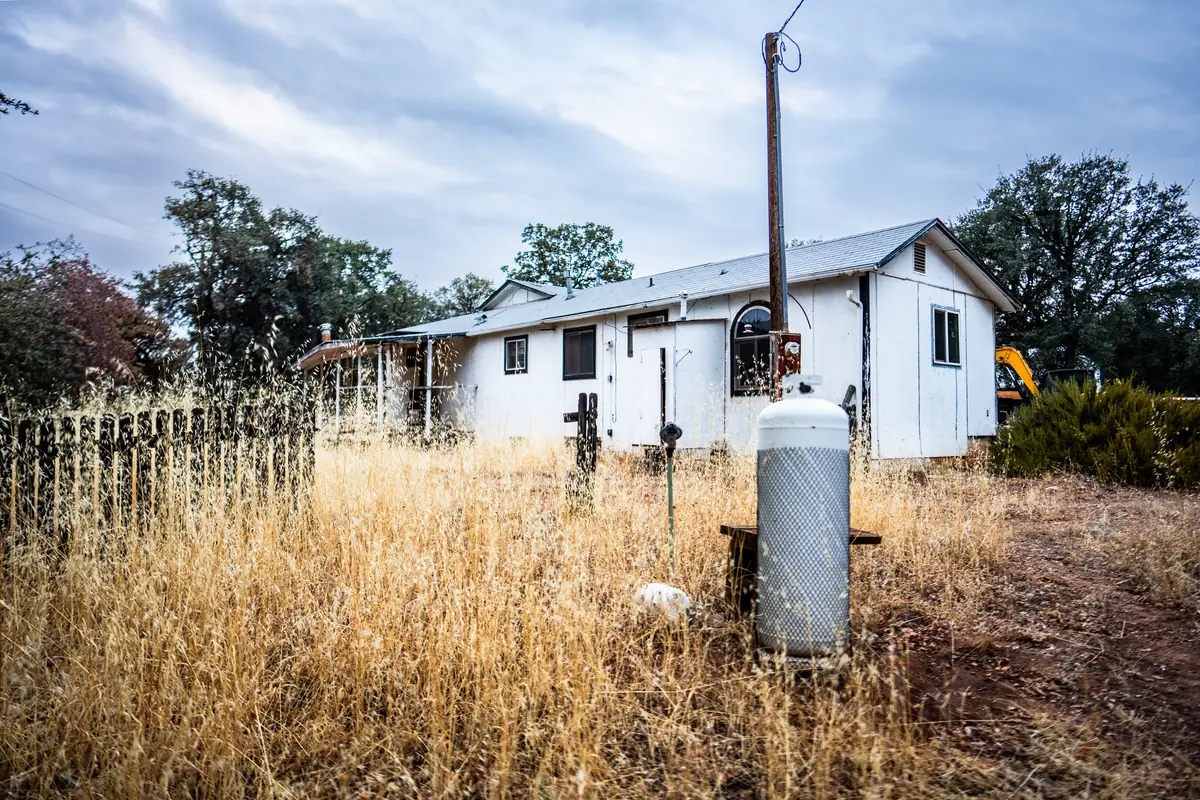
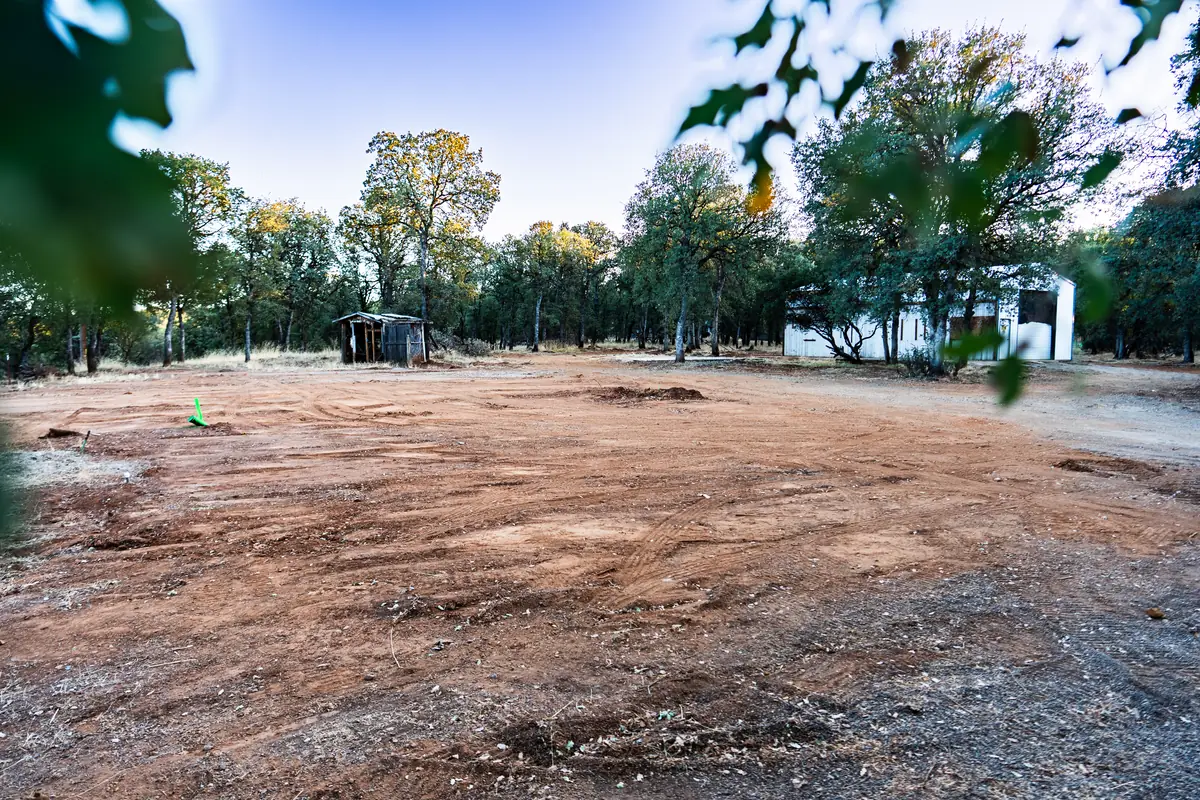
The first photo shows the white house as it stood in an overgrown lot, with dry grass up to the porch. The second shows the same part of the property once the work was done: open ground between the buildings that stayed, with trees beyond.
The house was the largest single piece of work on the property, and the open ground in the second photo is where the land ended up. Some buildings still stand on the property, and the photos show open ground between them.
What we did
The work ran over several days. Our excavators and heavy equipment took on the structures, from the old sheds and mobile homes to the three-bedroom house, which came down completely and was hauled off the site.
Our junk removal specialists worked right alongside the machines, loading debris into the roll-off dumpsters and clearing the vehicles, boats, RVs and trailers, the lumber and the general junk across the acreage.
We pulled out metals and reusable materials as the work went, hauled the remaining debris, and removed the combustible material so the land ended up open and clean.
The equipment and dumpsters we used
This was a multi-acre, multi-day job, so it took more than one machine and more than one dumpster. We brought in our excavators and heavy equipment for the structures, and roll-off dumpsters to hold what came out of them.
A roll-off dumpster is the backbone of a job like this. It sits at the property while the work goes on, and we haul it away when it is full and bring an empty one. That keeps the machines working instead of waiting for loads to leave.
We rent three sizes. The 20-yard is $450 a week with 2 tons included, the 30-yard is $550 with 3 tons, and the 40-yard is $650 with 4 tons. Each extra ton is $110 and each extra day is $10. A property cleanout that includes a house will usually want the bigger sizes, and we help you choose.
Heavy loads like rock, dirt and concrete need their own planning. WM, which provides garbage service in Cottonwood as Anderson Cottonwood Disposal, says rocks, dirt and concrete need a scheduled dumpster, so we do not tell anyone to put those in a household cart.
Source: WM Shasta County service guide
The cleanup and haul-off
Clearing the buildings is only half of a cleanout. The other half is everything that was in and around them, and on this property that was a lot.
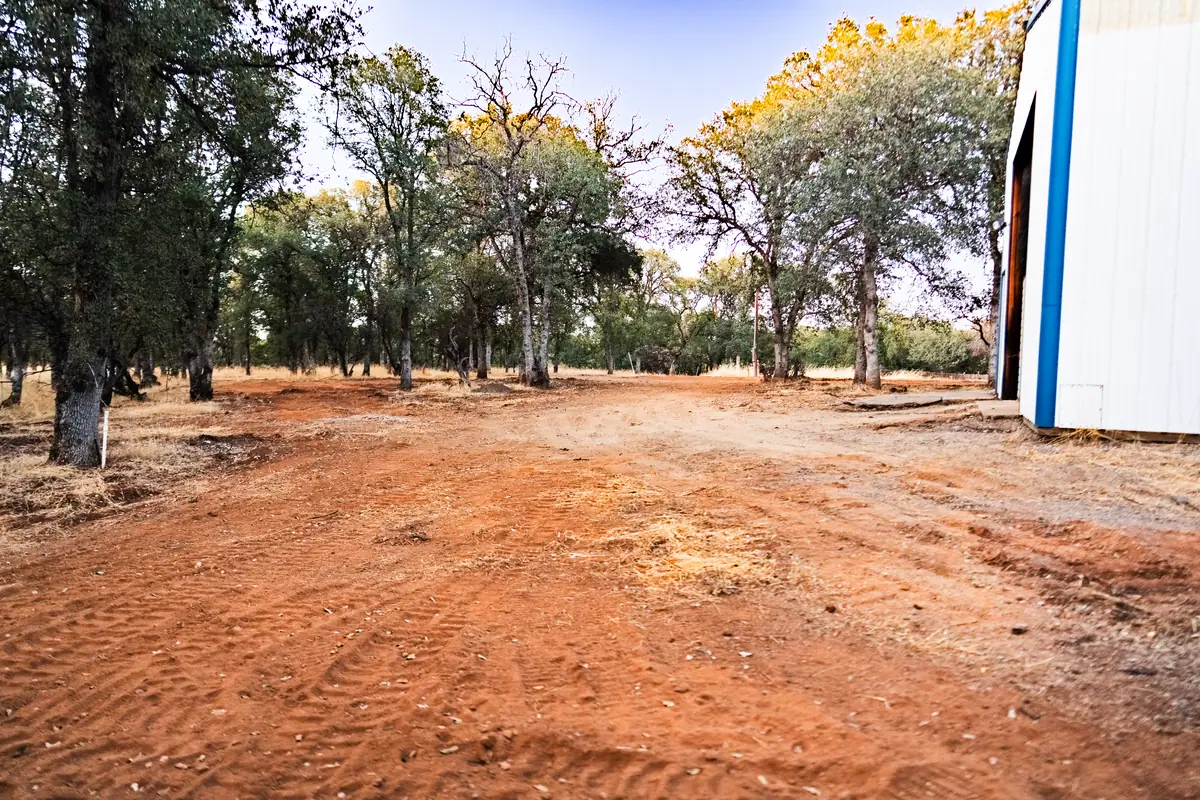
The photo below shows a cleared yard beside a metal building after the work, with the concrete apron and the ground around it open.
Our junk removal specialists worked beside the excavators the whole time. As structures came down, they loaded the debris into dumpsters and cleared the piles of lumber and loose junk that had built up across the property. That is the same junk removal we do for a single garage, only here it ran across acres.
We took extra time to separate recyclable metals and salvageable materials. Metal from vehicles, trailers and building frames does not have to go to the landfill, and neither does every board or fixture that still has use in it. Sorting takes patience, and it keeps reusable resources out of the landfill.
Old vehicles and trailers come with disposal rules of their own, covering tires and any appliance that holds refrigerant. Those are set by the state and federal agencies linked below, and they shape how we handle that part of a load.
Source: CalRecycle waste tire haulers, EPA on household appliances and demolition
Fire fuel removal and defensible space
Clearing the land was not our only priority. We also removed piles of combustible debris and excess fire fuel, which helped improve the property's defensible space and its wildfire preparedness ahead of Northern California's fire season.
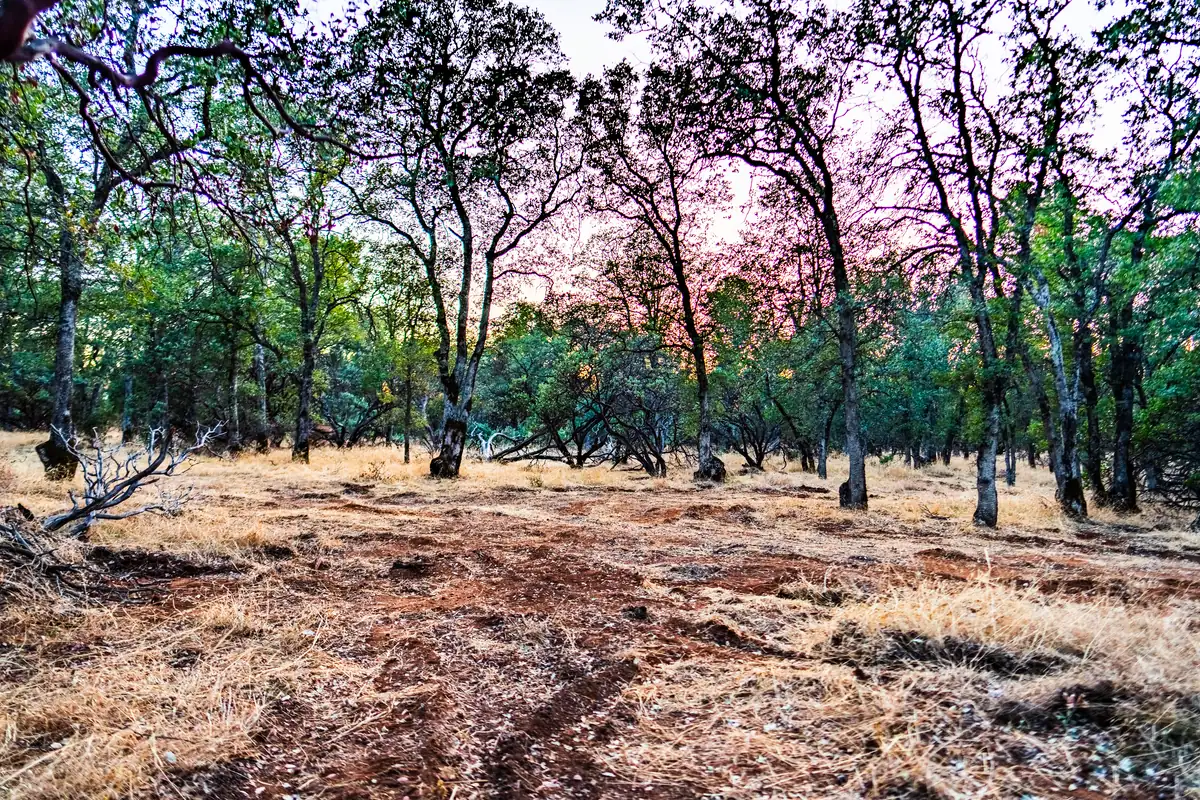
The photo below shows cleared ground beneath the trees. Dry grass still grows at the edges, which is vegetation and a separate subject from the debris we hauled.
Old lumber, dead material and stacked junk burn easily, and on a rural Shasta County parcel they sit close to dry grass and brush. Hauling them away takes fuel out of the picture. It is a simple idea, and on this property it made a real difference.
We want to be clear about what we did here. We hauled combustible debris and fire fuel off the land. Rules about vegetation clearance around a home are a separate subject, and our defensible space page explains them and cites the sources.
How demolition works in Cottonwood
Cottonwood is an unincorporated community, so Shasta County handles the permits rather than a city. A property here goes through Shasta County Resource Management, Building Division. The county issues the demolition permit, and its forms include a demolition plot plan.
On a job with a house, the paperwork is part of the job. We handle the permit process on our demolition jobs, and we will tell you what the county needs for your address.
The state contractors board lists a removed or demolished structure among the work that needs a building permit. We hold the C-21 demolition licence, and we take on structures from sheds to houses.
A mobile home adds one more step. The state housing department runs a process for the title and registration of a mobile home, and we tell owners to confirm both with the department before a unit comes down.
Source: Shasta County building forms and applications, CSLB building permit requirements, HCD manufactured and mobile home registration
One company for the whole cleanout
On this property the three-bedroom house called for demolition, the vehicles, boats, RVs, trailers and loose junk called for junk removal, and the roll-off dumpsters held what came out of both. Each of those is a service we offer on its own, and a property like this one needs all of them.
This job used demolition, junk removal and dumpster rentals together, and a property owner deals with one company for all three. You can also hire us for just one piece, such as a single dumpster for a cleanup you do yourself.
The result
What started as acres of abandoned vehicles, deteriorating structures and unwanted junk became a wide-open property with a fresh start.
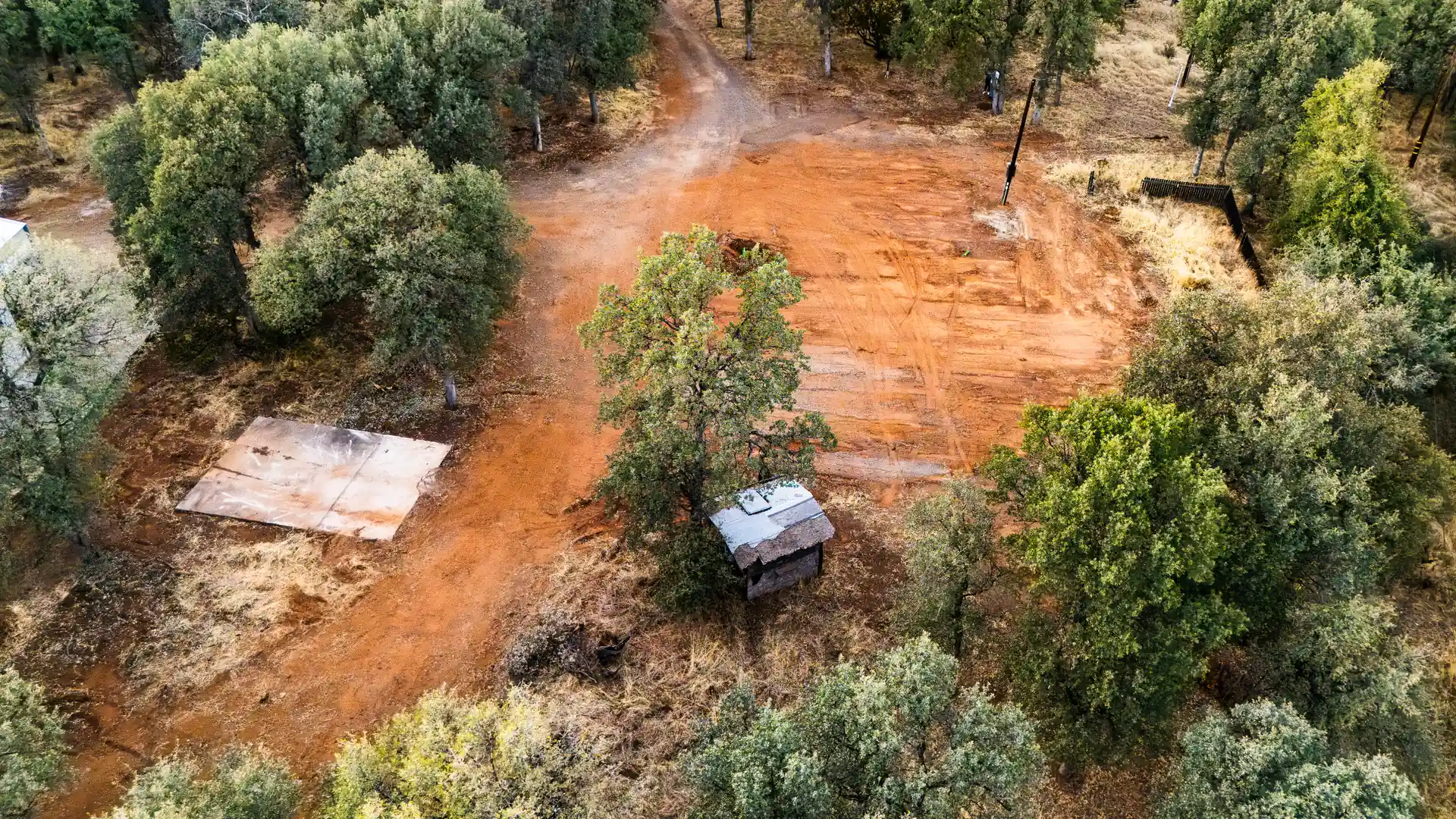
The aerial photo at the top of this page shows the property from above when the work was done: bare ground among the oak trees, with a concrete slab at its edge.
The three-bedroom house was down and gone. The mobile homes and sheds were gone with it. The vehicles, boats, RVs and trailers had left the land, the lumber and debris were hauled, and the combustible piles that could carry a fire were removed. Between the house demolition, mobile home removal, junk hauling and fire hazard reduction, this Cottonwood property cleanup was one for the books.
Do you have a property in Cottonwood or elsewhere in Shasta County that needs the same treatment? Call (530) 276-8755 or ask for a free estimate. Tell us what is on the land, and we will tell you how we would tackle it.
More about this work
- Property and lot cleanout
- Junk Removal in Redding, CA
- Roll-Off Dumpster Rentals
- Service area: Cottonwood
- Mobile home removal in Millville
- Multi-structure demolition and property cleanup in Bella Vista
- Residential structure demolition and junk removal in Redding
- Mobile home removal in Shasta Lake
More about Demolition Services
Planning a demolition? Read about permits first.