
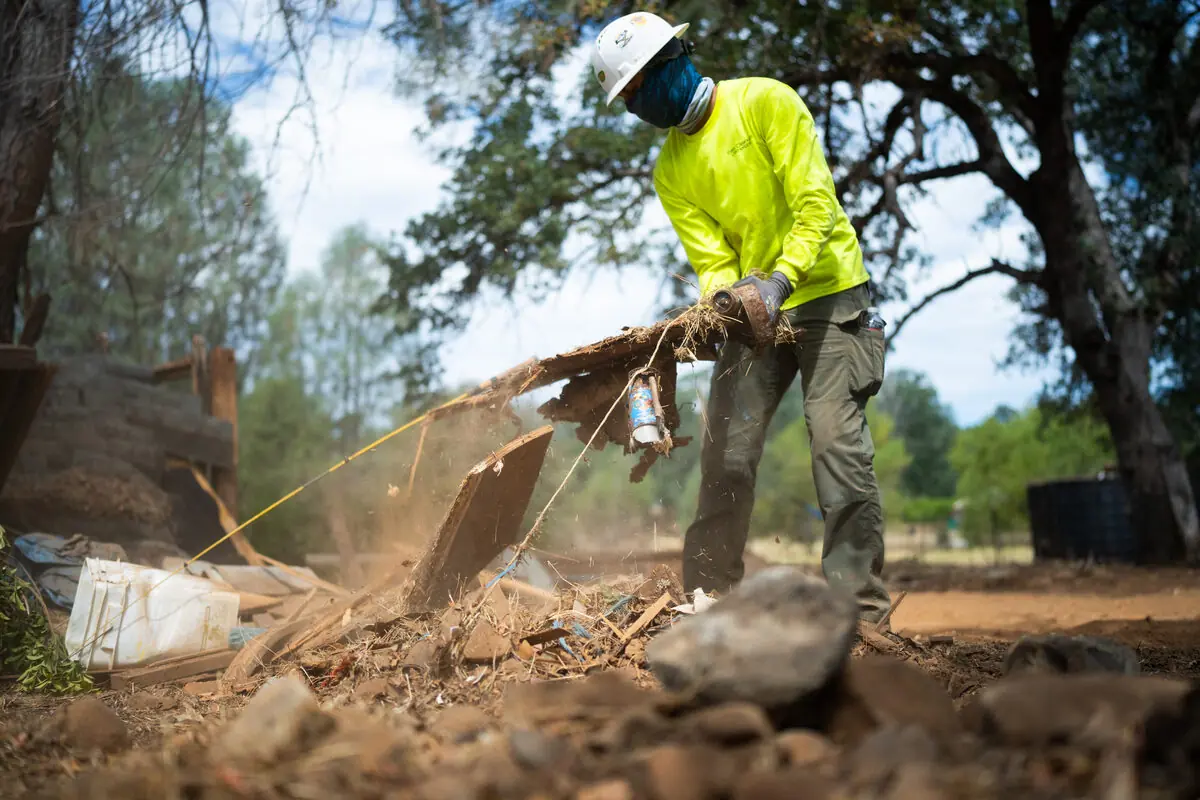
Defensible Space Clearing
Easy Cleanups clears brush and ladder fuels and hauls the material away, for Redding and Shasta County homeowners who got an insurer letter or an inspection notice about defensible space.
- Serving Redding, CA & Shasta County
- Free estimates
- Open Monday to Friday, 7AM to 5PM
What defensible space clearing includes
Brush clearing and fire fuel reduction for homeowners in Redding and Shasta County: we clear, thin and haul away what your insurer or inspector flagged. The page lists the state rules, with sources.
Defensible space is the cleared, thinned ring of ground around a building that gives a wildfire less to burn. We do the clearing and the hauling, so the work on your list is finished and the material leaves the property.
- Brush and weed clearing
- Ladder fuel removal
- Dead growth cleared from the yard
- Clearing around outbuildings and decks
- Flammable debris carried out
- All cleared material hauled away
Got a letter about defensible space?
Many Shasta County homeowners now hear about defensible space from an insurance company at renewal, or from an inspection notice. The letter says clearing is needed. It rarely says who will do it.
That is the work we take on. You tell us what the letter asks for, we look at the property, and we clear it and haul the material away.
Brush clearing and fire fuel reduction
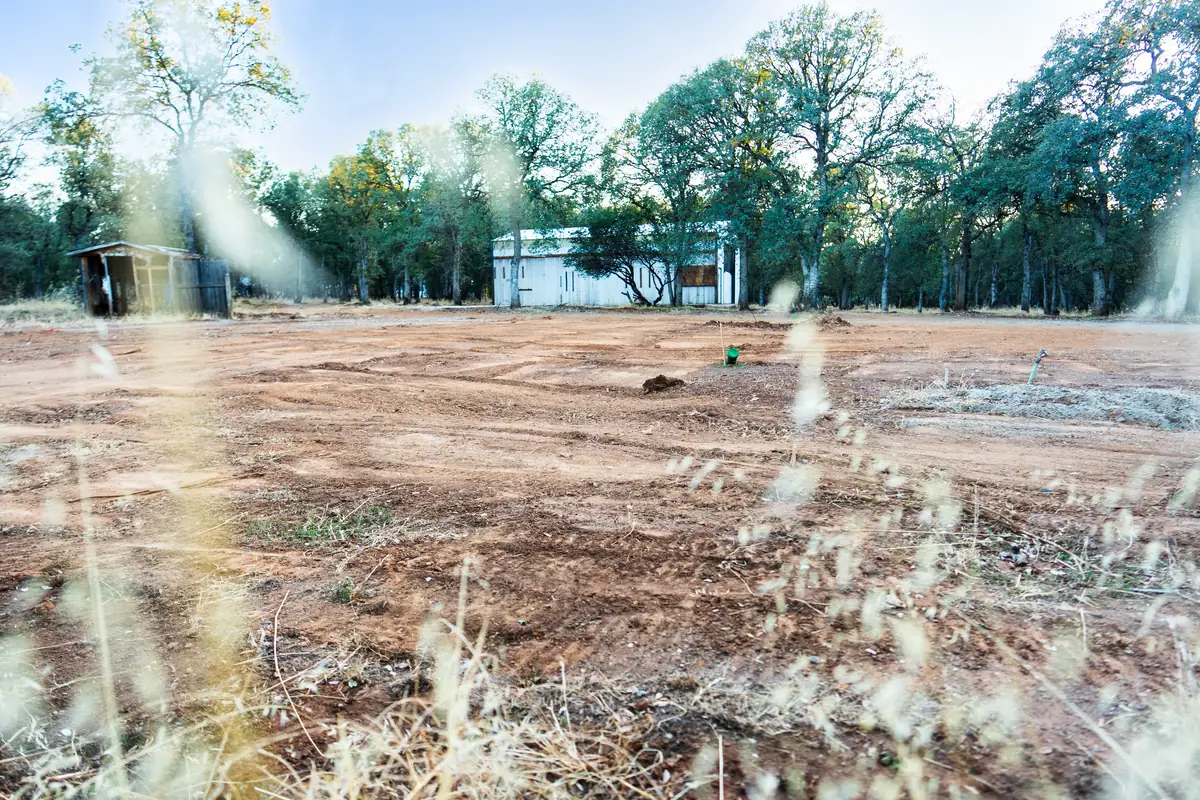
A cleared lot looks like this: open ground with the dry growth and debris gone. This one is a Cottonwood property after a fire fuel removal job.
Brush clearing in Redding and Shasta County
Overgrown brush and dry weeds near a building are the easiest fuel for a grass fire to reach it. We clear them back and leave the ground open.
Ladder fuel removal
Ladder fuels are growth that can carry a fire vertically, from the ground into shrubs and then into the trees. We take out what links the two.
Dead growth, leaves and needles
Dead plants, dry leaves and fallen needles burn fast. We rake and clear them from the yard around the home.
Decks, outbuildings and propane tanks
Stored material under a deck, and growth against a shed or a propane tank, gives fire a way in. We clear it out and back.
Hauling it away
Cleared material is loaded onto our truck and hauled off, so it does not sit in a pile beside the house you just cleared.
California defensible space requirements today
We checked the rules below on November 15, 2026. Each one is linked in the sources at the bottom of this page. Read the original text for your own property, because it is the final word.
State law (Public Resources Code 4291) asks for defensible space of 100 feet from each side and the front and rear of the structure, and no further than your property line. It applies in the State Responsibility Area, where CAL FIRE enforces it. Very High Fire Hazard Severity Zones in city and county areas are covered by Government Code 51182.
Zone 1: out to 30 feet or the property line
Remove dead or dying plants, including grass, leaves and needles, from the yard, roof and gutters. Remove dead branches over the roof and near windows and walls. Keep branches 10 feet from chimney and stovepipe outlets. Move exposed firewood piles out of this zone unless they are covered with fire-resistant material. Clear flammable material under and beside decks, balconies and stairs.
Zone 2: 30 to 100 feet
Create horizontal and vertical spacing between plants, by gaps in the fuel or by continuous tree canopy. Remove dead and dying woody growth from the ground and from above it. Loose litter may be up to 3 inches deep. Cut annual grasses and flowering plants to a maximum of 4 inches. Exposed wood piles need 10 feet cleared to bare mineral soil.
Outbuildings and propane tanks
Clear 10 feet to bare mineral soil around them, then keep another 10 feet free of flammable plants.
Source: California Public Resources Code 4291, 14 CCR 1299.03
Spacing guidance from the Board of Forestry
The state Board of Forestry publishes general guidelines for creating defensible space. Its spacing figures are a rule of thumb, so treat them as guidance and not as a requirement for your lot. It asks for clearance between fuels of 4 to 40 feet in all directions. Spacing between tree canopies is 10 feet on a 0 to 20 percent slope, 20 feet on 20 to 40 percent, and 30 feet above that. Between shrubs, leave twice the shrub height on a 0 to 20 percent slope, four times on 20 to 40 percent, and six times above that. Keep a vertical gap of three times the shrub height between the top of a shrub and the lowest tree branches.
Zone 0: the 5-foot ember-resistant zone is not in force
Zone 0 is the first 5 feet next to a building. The Board of Forestry approved an emergency package for it on August 19, 2026. The state Office of Administrative Law lists that filing as withdrawn on September 8, 2026, and no new filing is listed, so no compliance clock has started. Some news stories still say the rule was approved. Check the two official pages linked below before you act on one.
State law already refers to an ember-resistant zone within 5 feet. If you want to get ahead of the rule, tell us when we walk the property.
Source: Office of Administrative Law actions, Board of Forestry Zone 0 page
Shasta County and Redding local rules
Counties and cities can add their own vegetation rules on top of the state ones. For the unincorporated county, Stay Ready Shasta has the county ordinance and a program that helps owners who cannot comply. Inside Redding, call Redding Fire at 530-225-4141 to ask what applies to your street. We do not quote local distances or deadlines here, because they should come from the county or the city.
Source: Stay Ready Shasta
Insurance and selling a home
The California Department of Insurance says insurers must offer discounts for wildfire mitigation. Its list includes a 5-foot ember-resistant zone, clearing growth under decks, moving sheds 30 feet away, and trimming trees and removing brush under state and local defensible space law. Amounts vary by insurer, so ask yours.
If you are selling a home in a high or very high Fire Hazard Severity Zone, Civil Code 1102.19 asks the seller to give the buyer proof of compliance or of an inspection, or the buyer agrees to get it within a year of closing.
Source: California Department of Insurance FAQ, Civil Code 1102.19
How defensible space clearing is priced
We price each property after a free walk-through, because no two lots are alike. Four things move the price: the size of the lot, the slope, how easily we can reach the growth, and how much has to be hauled away. We do not guess a number over the phone, and you approve the price before the work begins.
How the work goes
Send us the letter or the notice.
Call or use the form, and share what your insurer or inspector wants done, plus photos if you have them.
We walk the property.
We look at the lot and the areas named in your letter, and give you a free estimate.
We clear and haul.
We cut and clear the growth, rake up what is left and haul it away.
What you do
- Share the letter or notice.
- Approve the estimate.
What we handle
- The clearing.
- The raking.
- The hauling.
Where we clear
We do defensible space clearing in Redding and across Shasta County, in the towns listed here. We are open Monday to Friday, 7AM to 5PM. Call (530) 276-8755 to check that we reach your address.
Where the rules come from
Checked on November 15, 2026
Each source below was checked on the date shown. Where a source is a copy of the official text, we say so. The official page is the final word on any figure.
- Public Resources Code 4291, defensible space around buildings, California Legislative Information
- 14 CCR 1299.03, Zone 1 and Zone 2 requirements, Cornell Legal Information Institute (a copy of the regulation text)
- General Guidelines for Creating Defensible Space, California State Board of Forestry and Fire Protection
- Defensible Space Zones 0, 1 and 2 (status of Zone 0), California State Board of Forestry and Fire Protection
- Recent actions on emergency regulations (Zone 0 filing withdrawn September 8, 2026), California Office of Administrative Law
- Civil Code 1102.19, disclosure when selling, California Public Law (a copy of the statute text)
- Safer from Wildfires: questions and answers, California Department of Insurance
- Stay Ready Shasta, local rules and help, Shasta County
Questions
It is the area around a home or building where dead growth is removed and the remaining plants are thinned and spaced out, so fire has less fuel to travel on. California sets the distances in state law and regulation, and some counties and cities add their own rules.
State law asks for 100 feet from each side, the front and the rear of the structure, but not past your property line. Within that, the first 30 feet (Zone 1) has stricter rules than the stretch from 30 to 100 feet (Zone 2). The page above lists what each zone asks for, and the sources are linked.
The 5-foot ember-resistant zone (Zone 0) is not a rule you can be cited under today. The state board approved a package on August 19, 2026, and the filing was withdrawn on September 8, 2026, so no deadline has started. State law already mentions an ember-resistant zone within 5 feet, and we can clear next to the house now if you would like to be ahead of it.
We cannot promise that, because your insurer or the fire agency decides what it accepts. We clear what the letter or inspection notice lists, and we can walk the property with it in hand. The California Department of Insurance says insurers must offer discounts for mitigation work, and the amounts vary by company.
Each property is priced after a free walk-through. Lot size, slope, how much growth there is, how easily we can reach it and how much has to be hauled off all change the number. You hear the price before we start.
Call (530) 276-8755, or request a free estimate online and tell us about the property. Photos of the areas named in your letter help.
We serve Redding, Anderson, Cottonwood, Shasta Lake, Palo Cedro, Bella Vista, Millville, Happy Valley, Red Bluff, Shingletown, Burney, Weaverville, Corning, Lakehead, Mount Shasta, Weed, Dunsmuir, McCloud, Hayfork, Lewiston, and Fall River Mills. Dumpster starting prices apply inside Redding city limits.
Ready when you are
Stay Up to Date
Get access to exclusive deals & educational content